Planning a Plunge Pool in Los Angeles: What to Check Before You Request a Quote
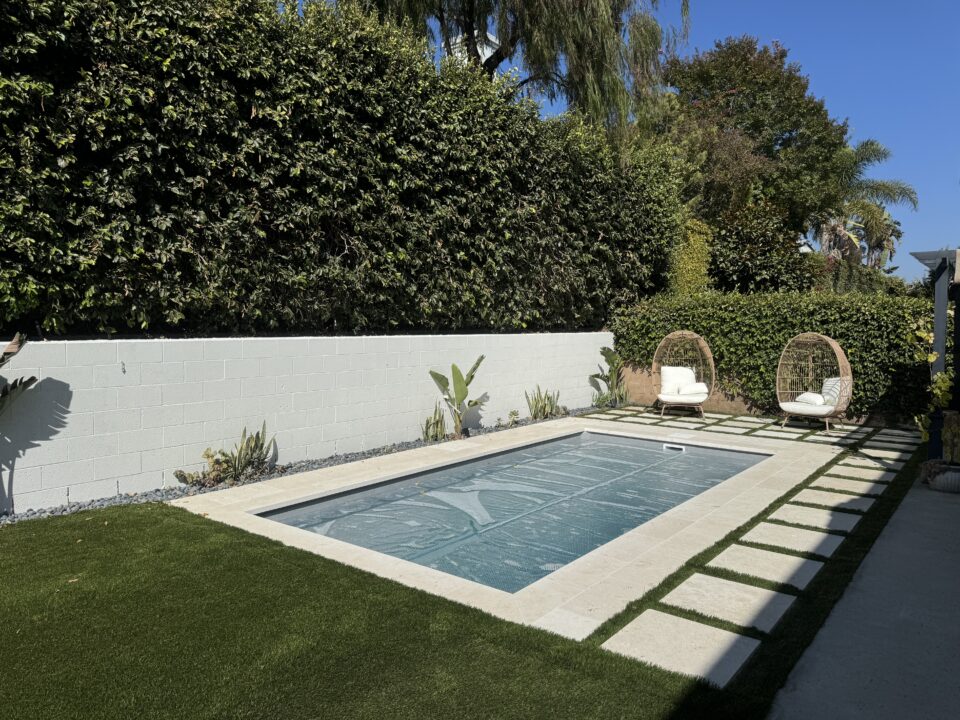
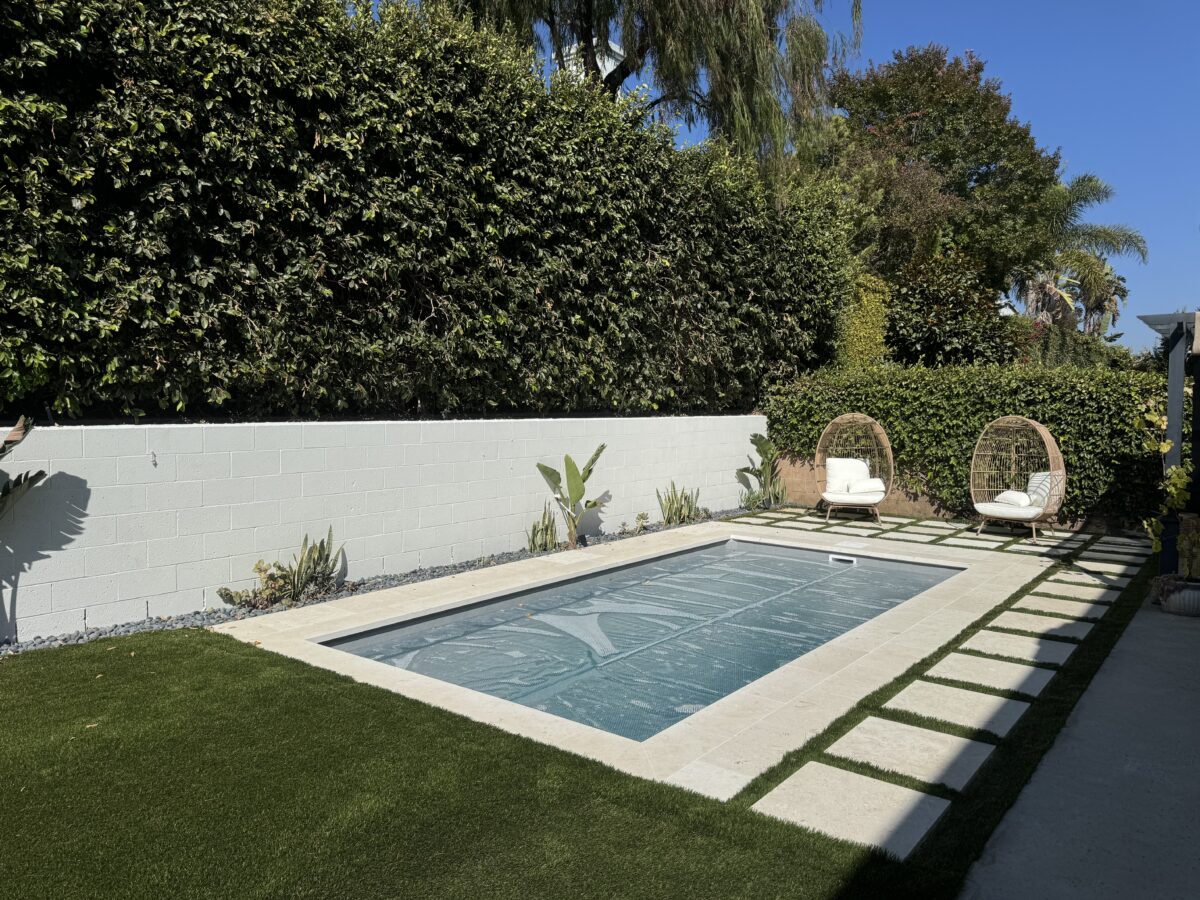
A prefabricated pool arrives with its shell already made, but the finished project is built around your property. In Los Angeles and the Westside, the pool you choose, access to the backyard, equipment and the outdoor space around it all shape the installed cost.
That is why we start with the whole project. You may want a pool fitted into an existing patio, or a backyard transformation with new paving, seating and landscaping. Both can begin with a factory-made concrete or fiberglass shell, but they involve different amounts of work.
What prefabricated means for concrete and fiberglass pools
A precast concrete pool is manufactured before delivery rather than having its shell formed and sprayed on site. A fiberglass pool also arrives as a manufactured shell, using a different material and construction process. Each system has its own available shapes, finishes, engineering and installation requirements.
Factory manufacture gives the project a defined shell to plan around. For example, Plungie describes its concrete design as a monolithic precast shell without cold joints, with engineered lifting points. Soake Pools describes engineered precast shells with tiled interiors and stamped structural design. For fiberglass options, we also work with The Little Pool Company, whose freestanding systems use a composite support structure. Foundation and installation requirements depend on the selected model; not every prefabricated pool follows a conventional inground installation. The selected model’s specifications guide the installation and the features available for your backyard.
These controlled production processes, manufacturer engineering and written product warranties are important reasons to consider a prefabricated pool. The finished result also depends on matching the selected shell to the property and installing it correctly.
Prefabricated does not automatically mean a cheaper finished project
Moving shell production into a factory changes part of the construction process. It does not remove excavation, delivery, utility connections or the work needed to make the backyard usable.
Depending on the site and scope, a completed prefabricated pool project can overlap the budget of a gunite project. A straightforward installation into an existing outdoor space is a different undertaking from a difficult-access site with extensive new hardscaping. Choosing a prefabricated pool solely because you expect it to be cheaper can therefore give you the wrong starting point.
The shell and equipment you select
The shell’s size, shape, depth and finish establish the starting point. Built-in seating, entry steps and other features depend on the model. Concrete and fiberglass options should be considered on their actual specifications, including how they fit the available yard.
The equipment package also matters. Pumps, filtration, lighting and controls need to suit the selected pool and your intended use. Some manufacturer packages include items that another system treats separately, so the project should identify what comes with the pool and what is being added.
Heating is another design choice. The suitable heater, its capacity and the connections it needs depend on the pool and how you expect to use it. A gas heater or electric heat pump may involve different service requirements; any necessary gas or electrical upgrades belong in the project scope.
Sanitation can use conventional chlorine dosing or a compatible saltwater chlorine generator. A saltwater pool still uses chlorine: the generator produces it from dissolved salt. It still needs water testing and balanced chemistry. The selected system and manufacturer requirements determine the appropriate equipment; a salt generator may already be included in a particular package.
Freight and getting the pool into the backyard
A factory-made shell has to travel from its manufacturing or distribution location to your property. Where it comes from, its dimensions and the delivery arrangements affect the freight involved. If the selected pool is manufactured outside California, that transport needs to be accounted for as part of the project.
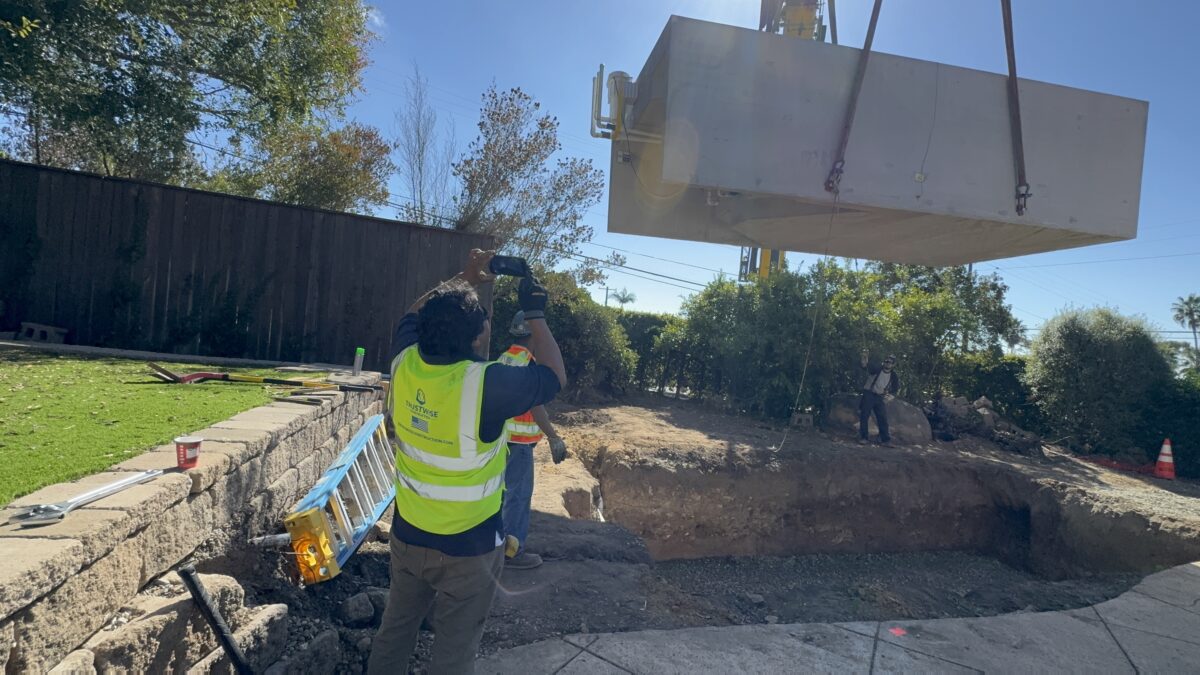
Delivery access and placement are separate considerations. The truck needs a suitable arrival point, and the lifting plan must account for the shell, crane position, reach and site conditions. Plungie’s published installation process identifies crane hire as a site-specific part of installation affected by property access.
Some properties may need temporary access work or coordinated traffic control. A road closure is only relevant when the delivery plan and local jurisdiction require it; it is not an automatic part of every pool installation. Those requirements should be established for the actual address.
The installation work beneath and around the shell
Even with a completed shell, the ground needs to be prepared for the selected system. The project may include removing existing paving, excavation, hauling material away, preparing the specified base, drainage and backfill. The manufacturer’s requirements and the site design govern that work; concrete and fiberglass systems should not be treated as interchangeable installations.
Plumbing routes, the equipment location, electrical connections and bonding also need to be planned. Existing utilities and the distance between the pool and equipment can affect the work involved. Drawings, engineering, permit requirements and inspection coordination belong in the scope alongside the physical installation.
A pool installation or a complete backyard
A pool-only project can make sense when the surrounding yard already works. It still needs the required installation, access and safety provisions, along with restoration of any areas disturbed by the work.
A complete backyard project may also include a new patio, decking, steps, seating areas, landscaping or broader drainage improvements. The material selections, area being finished and connection to the house all affect the scope. These features are not automatically included with a pool shell.
At Trustwise, our pool and backyard planning considers how those pieces fit together. Deciding where you will sit, walk and gather helps establish what should be built around the water, whether you are exploring fiberglass or precast concrete.
Understand what the manufacturer warranty covers
Warranty coverage is another reason to look beyond the shell price. For example, Plungie identifies a ten-year structural shell warranty, subject to its written terms. For Soake Pools and The Little Pool Company, the warranty should be reviewed for the selected model before the project is finalized.
Coverage varies by manufacturer and model. Finishes, equipment and installation work can have separate terms from the shell itself. The actual warranty for your selected pool, including installation and maintenance conditions, is what matters, not simply the number of years in a headline.
Plan the pool around the backyard you want to use
If you are planning a pool in Los Angeles or the Westside, complete the Start Your Project form. Tell us about your property, the pool you have in mind and whether you want a pool installation or a complete backyard transformation. We will review the details and discuss the next steps.